
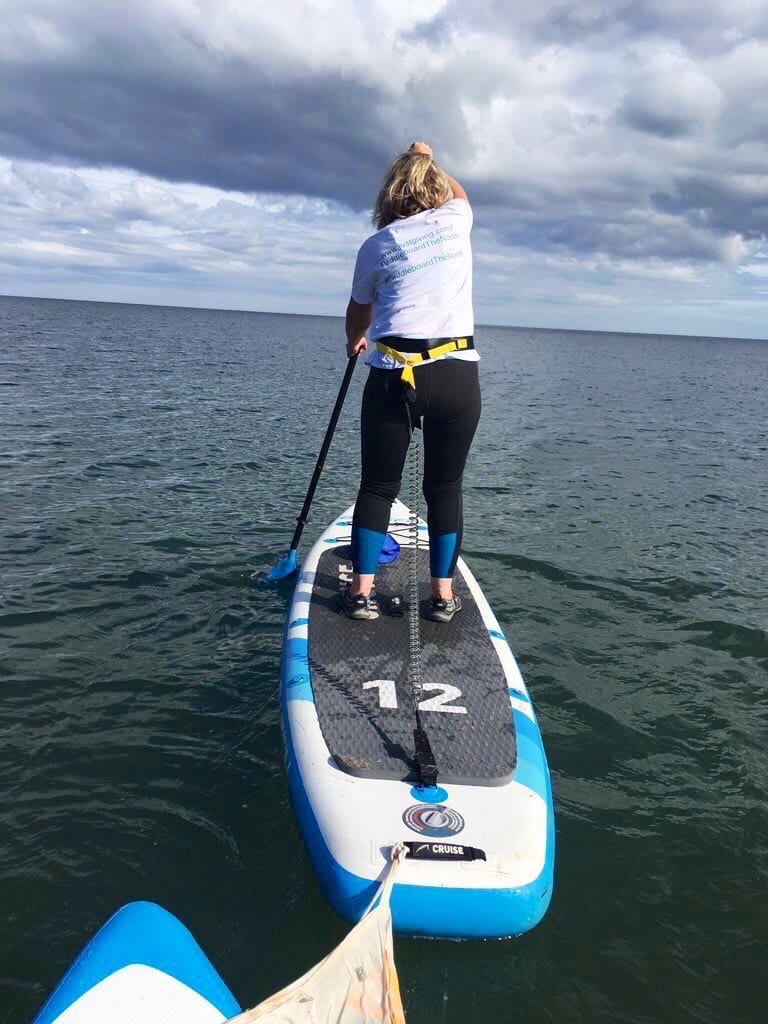
Within the space of a decade, paddleboarding has transformed from a relatively well-regarded watersport into one of the most popular outdoor activities in the world. Being more accessible than surfing and an activity that can be enjoyed not only all year round but in a greater variety of environments, it is easy to understand why stand-up paddleboarding, or SUP, is so celebrated.
In the wake of this popularity, SUP has grown and diversified. Initially, paddleboarding was a straightforward endeavour. Some individuals and groups wanted to explore the water atop a stable and easily maneuverable board, while others wanted to push these limits and race. Now, however, there are an even greater number of reasons to embark on a board.
SUP Surfing
Despite once being seen as an alternative to surfing, SUP has now merged with the watersport. Paddleboarders are heading out to catch breaks and ride waves in the same way as surfers would. Paddleboarders, however, don’t need to lie on their stomach in preparation and are, as a result, better able to catch waves being already in position as they appear. Paddleboarding also opens up a greater number of waves too, with small waves even being suitable for paddleboarders to enjoy.
Certain paddleboard designs are now being offered with surfing in mind, being more responsive and nimble on the water, with lighter paddles being created to give paddleboarders an advantage in performance.
SUP Photography
The stability of a paddleboard, as well as the various mounts that can be attached to boards, opens up a new world of possibilities for photographers. In addition to the unique perspective that amateur photographers gain from being on the water, able to capture new vistas from lakes and rivers, SUP photography has also helped the professional watersport community.
This is because photographers and videographers are able to capture improved images and footage from a stable position on their board even when on the water. Now, if you’re watching or following a competitive tournament, you’re likely to see images taken from those standing on paddleboards!
SUP Yoga
One of the biggest communities found within the paddleboarding community is that of the yoga practitioners. Yoga, as a practice, is often considered to be improved when taking place in nature, which is why many classes will step away from the confines of a classroom and take place in the woodland or local park instead. This gives practitioners the opportunity to relish in wild landscapes.
The stability of a paddleboard and the environment it offers, that of serene waters away from the bustle, is ideal for yoga. Individuals and groups celebrate the open space of being on the water and find that their yoga practice is an improved experience. There is also a more challenging element to SUP yoga too and, while paddleboards are more than stable enough to host yoga sessions, the nature of water can challenge individuals, giving them an improved workout and testing their core strength more greatly than when practicing on stable ground.


